
Are Paver Driveways Better Than Concrete in Chatham-Kent? The Local Breakdown
Upgrading the front of your property is a major investment that requires careful planning and realistic expectations. Homeowners constantly debate whether poured slabs or paver driveways provide the best long term value for their specific neighborhoods. At Enhanced Landscaping & Design, we install heavy duty surfaces built to handle daily vehicle traffic and harsh weather. We want to give you an honest breakdown of how these materials actually perform in the real world.
Choosing the wrong material for your specific property grade leads to cracked surfaces and expensive repairs. Many property owners make assumptions about maintenance that leave them frustrated a few years down the road. Exploring the mechanical differences between these two options helps you make a confident decision for your yard. Having the right information protects your bank account and ensures your property looks great for decades.
What We Cover In This Article:
- The Honest Truth About Paver Driveways And Soil Settling
- Overestimating Poured Slab Lifespans
- Real World Maintenance Demands
- Frequently Asked Questions
The Honest Truth About Paver Driveways And Soil Settling
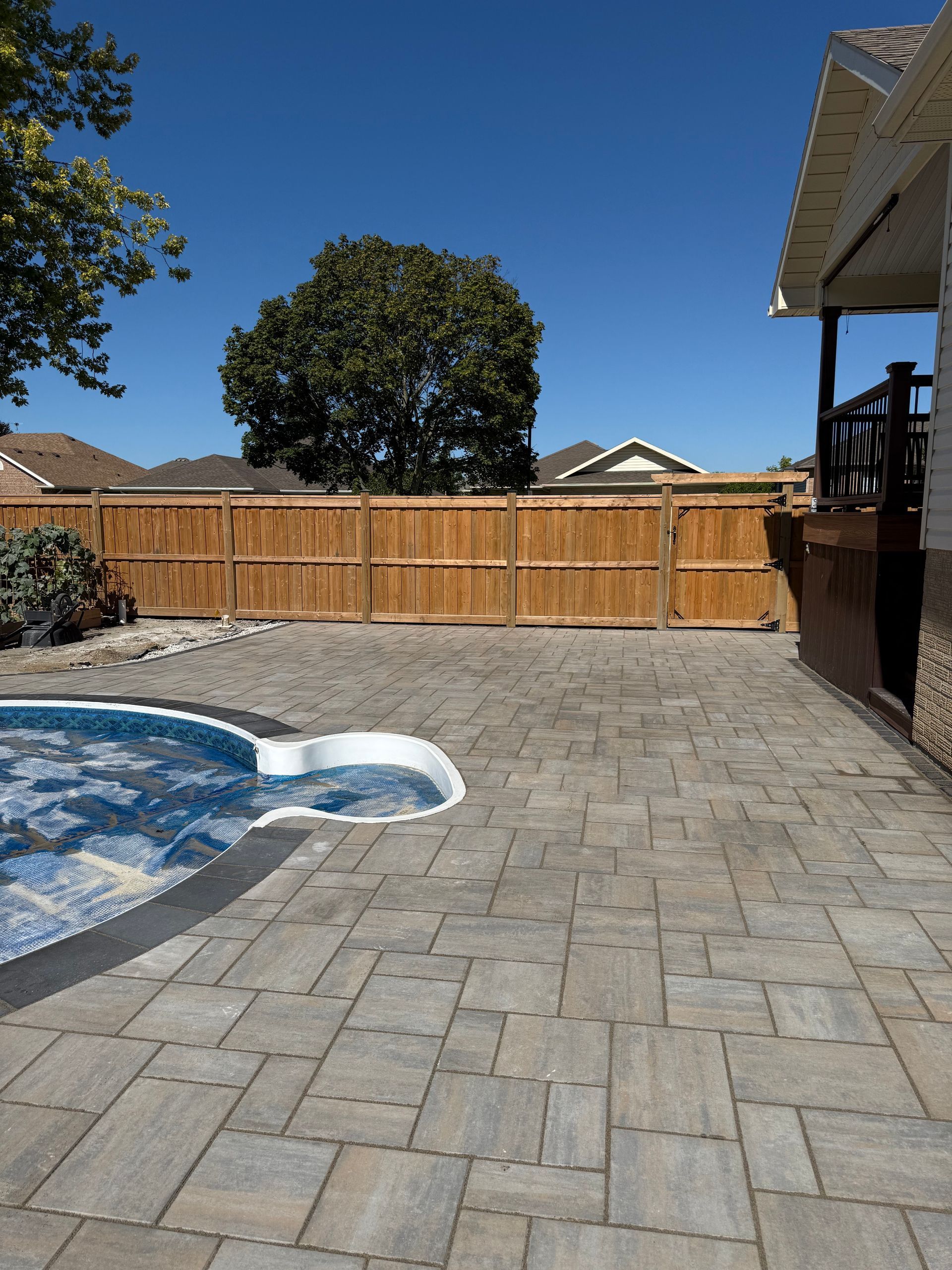
The ground underneath your property constantly shifts and settles as the seasons change. Poured concrete is a rigid material that lacks the ability to bend when the earth moves beneath it. When the sub base shifts unevenly due to heavy frost or poor drainage the rigid slab eventually cracks under the pressure. Paver driveways offer a distinct mechanical advantage because the individual interlocking stones can flex and move slightly with the ground.
→ From a professional standpoint: The interlocking joint sand allows pavers to distribute heavy vehicle weight evenly across the entire surface without snapping under pressure.
Overestimating Poured Slab Lifespans
A common misconception is that a poured concrete surface will last forever without any structural issues. While concrete is incredibly strong it remains highly susceptible to surface spalling and cracking as it ages. Once a solid slab cracks you cannot simply replace the broken section without the repair looking like an obvious patch job. High quality Unilock stones provide a better long term reality because individual damaged blocks can be pulled up and replaced easily.
This level of practical durability is exactly why homeowners trust our experienced crews in Blenheim and the surrounding region. It is a pattern the team at Enhanced Landscaping & Design hears regularly when discussing long term property value.
► Client Experience: Karen Cofell shared "Great guys. Did an amazing job on my driveway and sidewalk. Would highly recommend them!"
Delivering a reliable surface that stands the test of time is why Karen recommends our hardscape builders.
Real World Maintenance Demands
Every outdoor surface requires some level of physical upkeep to maintain its original appearance. Concrete owners must strictly seal their driveways to prevent oil stains and road salt from eating into the porous finish. Paver owners need to occasionally sweep fresh polymeric sand into the joints to stop weeds from taking root between the stones. Both materials demand attention but maintaining an interlocking surface often requires less heavy equipment and harsh chemicals.
→ A quick tip to remember: Keeping your gutters directed away from the driveway base prevents running water from washing out the compacted gravel foundation.
Frequently Asked Questions
Why do poured surfaces crack during the winter freeze?
When moisture seeps into the tiny pores of a concrete slab it expands violently as the temperature drops below freezing. This rapid expansion creates massive internal pressure that forces the rigid material to break apart from the inside out. Applying a high quality protective sealant before the cold weather arrives blocks the moisture and prevents this structural fracturing.
Can an interlocking surface support heavy pickup trucks?
Yes, professional hardscape installations easily support the weight of heavy personal vehicles and work trucks. The secret to this strength relies entirely on excavating deeply and compacting a thick layer of crushed gravel underneath the stones. When the foundation is built correctly the surface load transfers safely into the earth without causing tire ruts.
Making The Right Call For Your Yard
Evaluating your specific soil conditions and maintenance preferences points you toward the perfect material choice. Both options offer incredible strength but interlocking stones provide superior flexibility when the ground inevitably shifts. Weighing these practical realities ensures your front yard remains highly functional and visually striking for years to come. Reach out to our expert building team today to review your property layout and secure a reliable installation date.
Share This Blog